Wednesday, February 25, 2009

"Remember you are dust..."

Lent is here once again.

That time of the year in which the Church spends forty days in the desert (so to speak) is here and I'm putting down a few resources for those coming here to look for "Lenten homilies":


  • Click HERE for this year's Lenten message from Pope Benedict.
  • From an article by a Benedictine about just what is to be gained by "giving something up" for Lent?
  • From the website of the North American College in Rome, explanation of the ancient devotion of the "Lenten stational churches".  Each of the 44 churches are listed, along with their history and some pictures.
  • Godzdogz provides a "virtual Lenten retreat" being posted on the internet by a group of Dominican students.  Each day during Lent, a new entry will appear with scriptural readings, reflections, etc.

Wishing all of you a blessed & joyful Lent ahead.

Monday, February 23, 2009

So your child has a vocation...

I found this story when browsing the Dominican sisters' website Moniales.

So, your child has vocation. Congratulations! He or she has told you about the desire to enter a seminary, cloister, order, or monastery. This is wonderful news. You thank God for this gift to the Church; you make telephone calls to family and friends to announce the news. You find yourself busy with all that this decision entails. Eventually, in the days and weeks that follow you also find yourself pausing over a cup of coffee, lingering over your rosary beads and you find yourself saying to yourself, “What does this mean to me?”

It is really beautiful and moving to hear from someone whose child is called to serve God exclusively. I've never thought about how what they must be going through...

Blessings and grace to them :) Now they have powerful intercessors in the parents of St Therese of Child Jesus, Blesseds Louis and Zélie Martin.

Sunday, February 15, 2009

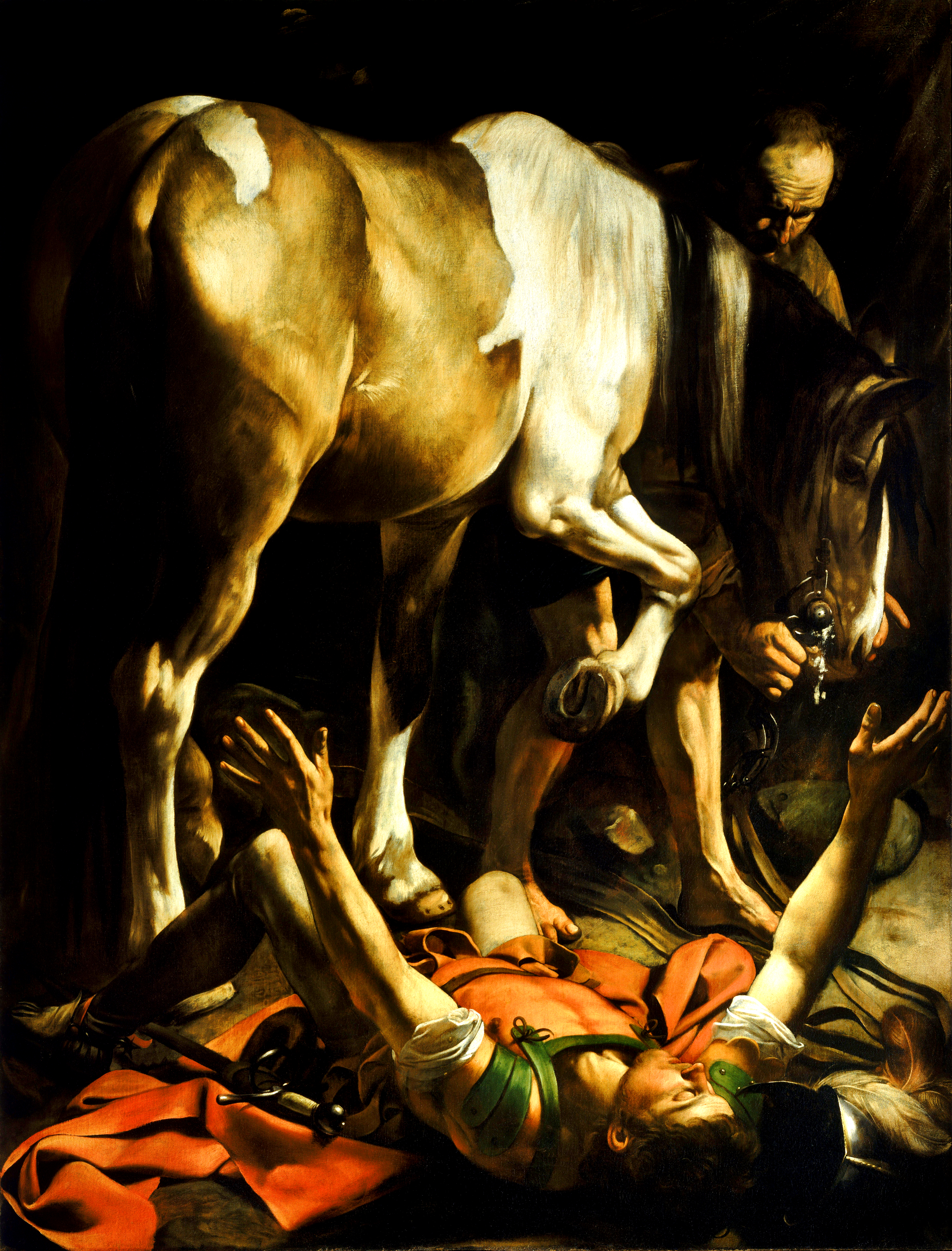
A road to Damascus

After last month's retreat, which took place on the days during which we celebrated the conversion of St Paul, I have been eager to read about conversions to the Christian faith. I am currently reading two books, "The Road to Damascus" a collection of conversion stories compiled by John O'Brien, and another one, "Theology and Sanity" by Frank Sheed.

The first one tells of many paths different people took to arrive at Rome, and the second, of the role of intellect in our spiritual life. I happened to read these, as I commemorated the 13th anniversary of my first communion. (I know, how sentimental it sounds to be remembering dates like these!) After all, I waited almost seven months to receive communion after my baptism, and couldn't help constantly thinking that the craziest thing I have ever done was to convert to Catholicism. Reading these two, I was struck anew with an even greater marvel at the abundant grace behind each conversion.

From Theology and Sanity, I read Sheed's defense of the importance, if not necessity, of having solid intellect in order to love God:

"It would be a strange God who could be loved better by knowing less.
...
Love of God is not the same as the knowledge of God; but if a man loves God knowing little about Him, he should love God more from knowing more about Him; for every new thing known about God is a new reason for loving Him."

Indeed, reading each person's conversion story made me marvel anew at the great mercy of God who brought us home through the least expected path. In all, however, Reason was instrumental. I have been asked several times, to tell my conversion story, and each time, I discovered something new, yet another moment where grace surged in to 'lift' Reason where it could not rise to the occasion. Recently I realized that conversion is a work of a lifetime, that we are invited to keep "turning back to God" after every inadvertent fall, and that every 'new' truth I learn about God help me to grow in love and to fight for this Love once more.

Evelyn Waugh, the famous English author who wrote Brideshead Revisited (among other excellent works), wrote that he "lost" his Anglican faith through a well-meaning Anglican bishop who explained that none of the books in the Bible were written by their supposed authors and invited his students to speculate on the nature of Christ the way 4th-century heretics had. This experience convinced me afresh of the importance of having solid intellect to strengthen our faith; lest in our moments of weakness our will, the other human faculty, falters. He did however, have a high esteem for the supernatural efficacy sacraments of the Church, speculating that if he had been a Catholic boy in his childhood, "fortified" with the sacraments and securely watched over by someone sensible in a Catholic school, he would never have abandoned his faith. (Little did he know...)

"However learned you are in theology, nothing you know amounts to anything in comparison with the knowledge of the simplest actual member of the communion of Saints" -- Evelyn Waugh

Another person who found her way to the communion of saints was a self-proclaimed atheist journalist, Gretta Palmer. Her story really highlighted the struggle of an atheist to accept Truth like a sunshine through a small crack in an 'atheist cell'. Truth has this quality to shine from under the dirtiest facade. Palmer wrote of her "confusion" in her quest to perfect men; not being able to explain why it was not possible to socially engineer a perfect society, naively assuming that hostility towards one another can be cured as one treats as a physical malaise. "Original sin" was the answer given by a priest when she asked him. Her 'scientific' quest for the fons of 'goodness' took her to battle-weary soldiers, giving themselves completely in spite of all the suffering and behaving in utmost noble manner. Interested in social engineering? Palmer wrote that she had a fantasy of becoming Madam "Secretary of Social Evolution", but was soon disabused of this notion on her trip to China when, amidst great suffering and valor of the soldiers, she realized that the most 'useful' thing she could do was to pray for the soldiers. Once again, Reason rules and she soon ran into an inconsistency -- why pray, and to whom does one pray, if there is no God?

"When atheist scientists attempt to study man, they undertake an 'intellectual absurdity'. Man, studied as a creature separated from the God who is constantly communicating with him, can never be understood." -- Gretta Palmer

Reason alone does not provide meaning to one's life. Fulton Oursler, another whose story is featured in The Road, a playwright behind the radio program The Greatest Story Ever Told, lost his childhood Protestant faith and while being an agnostic, thought that science was the only true 'religion', until he concluded that they had "no head for synthesis [and] no heart for seeking a meaning in life." This reminds me of an anecdote told by Cardinal George Pell to an audience of (presumably Catholic) scientists about what "hell" possibly could be for scientists. It sounds something like this: a place where all facts could be known simply by looking it up on a book somewhere on its vast shelves, where all the instruments to measure any kind of thing or to observe any kind of phenomenon are available for use, where all the scientific unknowns could be found out by simply asking. And yet, there is no meaning behind all that. There is no reason to want to know why the number p is transcendent. No reason to know why space-time continuum is affected by mass. No reason to know how old the Universe is. No reason to know how many Universes are there. No reason to know anything at all, if God is not. Truly, speaking as someone who considers her profession "scientific", I am horrified at the prospect of ending up in such hell.

I don't recall exactly how I found my way to the Church, but there is always too much mystery for me -- I'd rather fall on my knees in thanksgiving than to analyze it -- but I'll end off this 'segment' of the Road quoting Fulton Oursler:

"Everyone who faces the blinding light of the Damascus road sees things in himself that he will never tell. On the other hand, I do believe that every man blessed with the gift of faith owes it to his fellow man to tell what he can of his conversion, in the hope that someone else may get from the story a glimpse, a little bit of help, and find for himself the same release."

Friday, January 30, 2009

Omnia cooperantur in bonum

"Scimus autem quoniam diligentibus Deum omnia cooperantur in bonum his qui secundum propositum vocati sunt sancti"—Romans 8:28

And we know that to them that love God, all things work together unto good, to such as, according to his purpose, are called to be saints.

Today I cannot write anything much, but this verse from St Paul kept coming back to console me and I ask whoever reads this to say a little prayer for me. Thank you.

Thursday, January 29, 2009

4 SSPX bishops "Un-Excommunicated"!!!

I just came back from a retreat over the weekend, and wondering if we have "missed" any big news, either from Singapore or from the world. Can you imagine my surprise when I read, from a blog, that Rome had lifted the excommunication sentence from the 4 bishops of the 'notorious' SSPX???

All week our priest spoke of St Paul as our 'role model' on various topics in the retreat. We also had prayed for "Christian Unity" 8 days before the feast day of his conversion. But this is more than I imagined the 'gift' would be!

Deo gratias!

Tuesday, January 20, 2009

Hot off the 'oven'

I'm raising funds to go to grad school this Fall. I'm putting up "Catholic Mobile Prayerbook" - available for download here.


What is Catholic Mobile Prayerbook?


It is a small mobile application containing the common basic prayers that Catholics commonly say. From your all-time favorite "Our Father" to various devotions you can think of.

Why would I need Catholic Mobile Prayerbook?


For those times that you have to wait, it is a handy aide to help you pray. It'd be useful also when you forget the Act of Contrition in the middle of the confessional booth. Also, when you are asked to say grace before meal. Or to lead any prayer. Wherever. Whenever. One doesn't need a reason to pray.

What prayers are available inside?


The basics: Our Father, Hail Mary, Glory Be.

Devotions to Our Lady: Memorare, Angelus, Hail Holy Queen, Rosary

Daily Prayers: Morning Offering, Spiritual Communion, Apostles' Creed, Prayers before & after meal, Thanksgiving

Special Prayers: Act of Contrition, Adoro te Devote, Prayers for the pope, Te Deum, Prayer to St Michael the Archangel.

To request for more prayers to be made available, write me

What languages is it available in?


English, Español (Spanish), Latin, and Bahasa Indonesia.

Coming Soon: Francais, Italiano and Deutsch.

Does Prayerbook support my phone?


Prayerbook is developed on Java ME Platform. Nearly all recent mobile phones support Java ME. Check here to make sure.

How do I install it?

  1. If you click the download link below, it'll take you to a payment page, and then ask you for your phone number.

  2. Enter your cell phone number as requested: Your country code, followed by your cell phone number.

  3. Eg: 441223472777 (if you live in the UK), or 6598765432 (if you live in Singapore).

  4. As soon as you enter your phone number, an SMS is sent with a link to the file.

  5. Click on the link to download the file.

  6. If permission is asked to open/run the file, do allow it: select "Yes".

That's it!

How big is it?


Depending on the version you download, it ranges between 60-80KB. That should translate to less than a dollar to download via your phone. If you'd like to save money on the download cost, download it to your computer and send it via Bluetooth!

It says installation was successful but I can't find it!


On different phones, Java applications are stored at different places. On most Nokia phone, click the Menu to see all the installed applications. Sometimes it will be shown under "Game", or "Application", or "Installations". On Samsung phone, do check out "Java World".

If you really can't figure it out, email me your phone brand and model, and the name of the file you downloaded.

How much does it cost?


A single-language version costs $1.99, a two-language version costs $3.00 and all-languages version costs $5.00.

To promote this amongst the Indonesian-speaking people, the Bahasa Indonesia version is now FREE!

Why do I have to pay?


As much as I'd really like to encourage people to pray, I need to raise some funds to go to grad school. So *PLEASE* support my fundraising effort! (The story of why I am going to grad school is topic for another post -- if you'd like to know, mail me)

For free download, I have made available a Rosary widget for Yahoo! Widget. Get it here.

I'm also available for any freelance work to develop web widgets, desktop widgts, mobile widgets, and mobile applications. Drop me a line if you'd like to help me put through grad school!

Download Section


To have me email it to you:


Single Language Version
Your Email (to which the app is sent):


Two-languages version
Alternative Email (in case your primary email doesn't work):


Alternative Email (in case your primary email doesn't work):


To Download directly to your phone: (pay via your mobile phone bill)

Single Language (USD$1.99)

Español
English
Latin
Bahasa Indonesia (FREE)

Two Languages (USD$3.00)

English-Español
English-Latin
English-Bahasa Indonesia
Español-Latin
Español-Bahasa Indonesia
Bahasa Indonesia-Latin

All Languages (USD$5.00)

Multi-language
Learning Tip: document your steps!

These past few days I have been working on a little mobile app (J2ME / Java ME) that displays the various Catholic prayers and devotions. Simple stuffs like "Pater Noster" all the way to the mysteries of the rosary, and thanksgiving prayers, in multiple languages.

It started out pretty simply, and the complication happened only when I had to 'versionize' the source code and the resources used by different language versions. Some versions should be able to handle multiple-language requests from the user, some display only one language of choice.

Two problems: versioning and internationalization.

Internationalization has always been an interesting topic for most application developers because frankly, few of us bother to provision for Unicode display until the product is almost ready. Then began the scramble to make the application accommodate the havoc wreaked by the different encoding the input came in.

Versioning problems came about because I did not use CVS. Period. Well, there's more to the story than that, but bottomline is, there are existing tools that can track your files' changes.

During the course of this project, I have learned that Ant (which is the build tool I use to compile J2ME applications) is extremely nifty with multiple compilation paths. A little familiarity is required with the Ant build file, and more curiosity, to learn the various types of variable and property that are used to signal different customization and compilation paths.

For example (in J2ME Polish):

The element <sources> can be customized to point to different folders for different versions. So instead of re-naming your public classes, MyMIDlet_v1 or MyMIDlet_v2, you can stick with the same name in different folders.

The element <jarName> can contain references to other variables or properties, to be something like: "prayer-${polish.name}-${polish.locale}-${TwoLangCombi}.jar"

Those variables and properties can combine to indicate which resources folder you would like to use when compiling for a particular locale, or particular screen size, or particular handset brand.

Why am I writing this?
I have suffered greatly because I did not learn to use these 'best practices' in my daily work! I hope anyone of you who happens to read this and understand may benefit from my suffering and this little note ;)

Saturday, January 10, 2009

Rogate!


From the same book, The Soul of the Apostolate, I read a couple of stories of holy priests, both brilliant preachers, who each did seemingly "extraordinary" prayers and penances before their engagement commenced: a Father Lacordaire spent a long time before giving homilies and had himself scourged upon returning from the pulpit, while a Father Monsabre, was known to say all 15 decades of the Rosary on his knees before speaking at Notre Dame. When asked, he reportedly said that he was taking his "last dose of tonic".

Like many saints before them, these people have discovered the 'secret' to their 'success', in this case, in doing the apostolate of Christ, is to be found "at the foot of the Cross". Dom Chautard further added, that the Apostles were not asked to go to school in Athens, nor to study in Rome under the Caesars on how to conquer and govern empiers. Techniques of organization and fundraising and church-building and putting up school were not mentioned either. Only one thing is necessary: "Rogate" (Pray ye!).

Another modern apostle echoed the same sentiment, this time while encouraging us to have recourse to the Author of Grace Himself in the Blessed Sacrament:


It is impossible in human language to exaggerate the importance of being in a chapel or church before the Blessed Sacrament as often and for as long as our duties and state of life allow.

What I am expressing is not a pious practice or a luxury of the spiritual life. I am talking about its essence. Those who believe what I am saying and act on their belief are in possession of the greatest treasure available to man in this valley of tears. As by now thousands of saintly men and women have testified from experience, this is somewhere near the key to holiness. For this reason, I strongly recommend that each of us make a resolution -- no matter how much the decision may cost us -- to make a holy hour before the Blessed Sacrament exposed or reserved at least once a month or, if possible, once a week, and if we have the grace and our vocation in life permits it, even several times a week. Think of the empty hours that people spend weekly before the television screen -- an average I am told of some twenty hours per man, woman and child in America.

Someone may object, "But you are talking about mystics or saints, and I am neither. I am just an ordinary Catholic trying to save my soul." My reply: there can be no ordinary Catholics today, not with the revolution through which society is passing and the convulsion in the Church on every level. The Church today needs strong Catholics, wise Catholics, Catholics who are not swayed by public opinion or afraid to stand up for the truth. She needs Catholics who are willing to suffer for their convictions and, if need be, shed their blood for the Faith."


Read Fr Hardon's article here and an excerpt of The Soul of the Apostolate here.

Wednesday, January 07, 2009

Review: The Soul of the Apostolate

Happy New Year everybody! I know it is kind of 'early' to write about anything that says "you are dust and to dust you will return" - considering that Christmas season is still around for a few more days - but this is one inspiring writing quoted in the book I'm reading currently The Soul of the Apostolate, on the primacy of God in everything, and principally in the apostolic endeavor:

"[The apostle] acts as though success depended entirely on his own activity, but in point of fact he expects it from God alone.
...
He is always ready to say: 'O my God, Thou dost not will that the work I have begun should be completed. It pleases Thee that I confine myself acting valiantly, yet ever peacefully, to making efforts to achieve results, but that I leave to Thee alone the task of deciding whether Thou wilt receive more glory from my success, or from the act of virtue that failure will give me the opportunity to perform. Blessed a thousand times be Thy holy and adorable Will, and may I, with the help of Thy grace, know just as well how to repel the slightest symptoms of vain complacency, if Thou shouldst bless my work, as to humble myself, and adore Thee if Thy Providence sees fit to wipe out everything that my labors have produced.'"

Tuesday, January 06, 2009

Is Christ in my city? Is Christ in my country?

Jakarta

Following up after the last post, I realized this Christmas, while spent also in the heat of Jakarta, is unique, like it has always been. My sister and I took the afternoon flight on Christmas Day and arrived before 3 o'clock in Jakarta. Apart from the usual spartan decoration of the airport and the occasional Christmas-themed advertisement billboards, there was little else to indicate that it was Christmas.

My dad was waiting for us with a huge smile on his face. My mom, as usual, was supervising wholesale distribution of all kinds of beverage at her 'shop' - come rain or shine, Christmas or no. So we spent Christmas at the 'shop', waiting for her business to conclude for the day and had a quiet dinner.

Grace awaited us
My confessor had reminded me to remember to pray while 'on vacation', so I went home with a little apprehension lest the laxity of being on vacation at home makes us forget Him. This year though, Grace came in a form of a person :) It was a friend studying in the university in Singapore, who also spent her Christmas with her family, in another city in Indonesia.

Daily she would text me with a short snippet of what is happening to her and around her. Inevitably it would contain a prayer request, a concrete reminder for me to not forget to say my prayers. Her first text message echoed my silent lament: In Singapore we were positively inundated with Christmas decoration at every corner of every shopping mall, albeit for commercial purposes. For a self-proclaimed secular country with a Muslim majority like Indonesia, Christmas atmosphere was strikingly absent.

A few years ago, I would have "complained" and told myself that it is not my fault if I can't "feel" Christmas back at home. If I did not feel particularly charitable nor joyful during these diebus nativitatis, I would have attributed it to the lack of Christmas atmosphere. I was naive and silly, indeed, for wasn't Christ born for all of us in the whole world? Not only for those who were fortunate enough to live in countries that celebrate Christmas properly.

Looking back at the story of my own conversion, I realize that Indonesia and Indonesian Christians have the missionaries to thank. It is these silent martyrs and heroes who, perhaps inspired to bring the joy of Christmas to the pagan East, brought the Good News to my country. The joy of Christ was not meant to stay only in Bethlehem, nor in Palestine, nor in Europe. In the stifling heat of Indonesia, Christ is proclaimed.

Soon night fell and my sister & I found myself waiting in darkness in the car with the radio singing quiet tunes. My parents were out buying the next day's supplies for their 'shop'. I could hear my sister's thoughts echoing my own and my friend's: what a way to spend Christmas day! Suddenly, as if upon a cue, the radio played a most beautiful rendition of Ave Verum Corpus! I didn't cry, but I must confess I leapt with joy upon hearing that hymn, for it was balm to a drooping spirit.

No matter what circumstances we find ourselves in, I know that Christ is in Indonesia, Christ is in my city, and Christ is in my family!